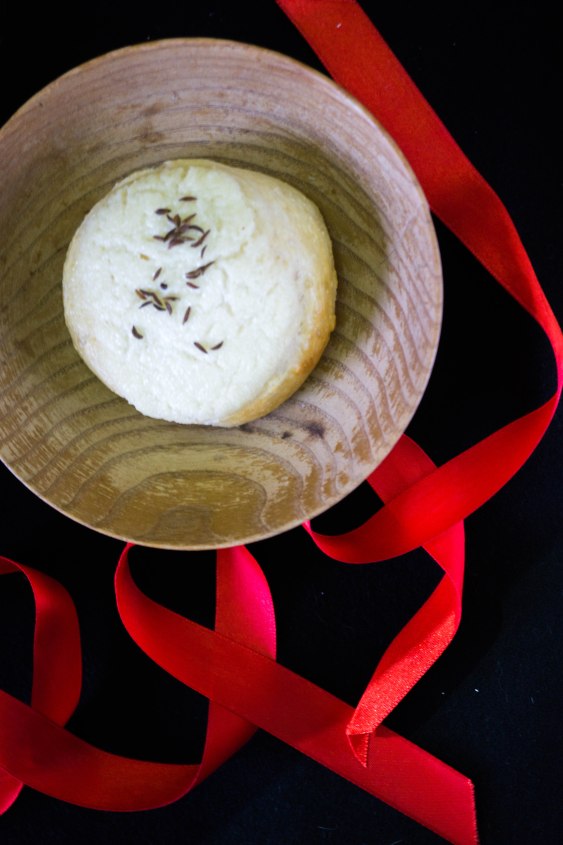
Estonian Traditional Curd filled Buns. Mulgi korbid

Mulgi korbid

Mulgimaa is perfect example about the globalisation already in 19th of century. During the American Civil War from 1861 to 1865 was lack of cotton and price was very high.
So, was demand for alternatives. South Estonia, Mulgimaa has perfect conditions for cultivation of linen. Bondage was in Estonia abolished 1816, but still farmers were very poor and land was owned by landlords. But because of America and demand for linen, farmers gets enough money to buy from landlords land and farms. And this area become rich and successful. This made others little bit jealous and they started to call people and this area Mulgimaa 🙂
In Latvia means word- Mulk- ” silly” and in Estonia it means “hole”- in meaning that the all richness went in to the one hole…:)

I have been already wrote about Mulgimaa. Estonian hidden treats.

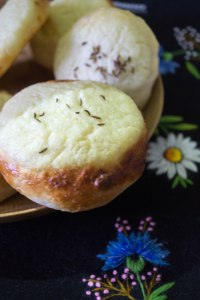
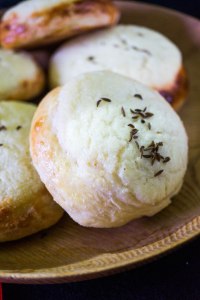
Mulgi- Mulgimaa is area  in South-Estonia, with own culture, traditions, food and dialect. korbid (plural “korbid”, singular “korp”)- curd or semolina filled buns are one of its famous signature dish. Mulgi Korbid filling and buns itself are not very sweet. But you can make sweet filling and add more sugar in dough, as well.

Traditionally Mulgi Korbid has  curd or semolina filling, but you can use potato filling, as well. This is perfect dish to made, when you made too much potato mash or bubert, and you have some leftovers.
dsc01838
Estonian Traditional Curd filled Buns. Mulgi Korbid.

Estonian Traditional Curd filled Buns
  • Servings: 15-16 buns
  • Difficulty: easy
  • Print
Mulgi korbid

Ingredients

  • 0, 5 litre milk
  • 35 g yeast
  • 2 tablespoon sugar
  • 100 g butter
  • 1 teaspoon salt,
  • 8 dl flour
  • Semolina filling or use Bubert recipe

  • 0, 6 litre milk
  • 0,5 glass of semolina
  • 2 tablespoon butter
  • 1 egg
  • salt, sugar
  • Boil a thick porridge from milk and semolina. Add butter, season with salt and sugar. Let cool down and add beaten egg.

    Curd/quark filling  look for home made quark recipe

  • 600 g quark
  • 2 tablespoon sour cream
  • 2 tablespoon melted butter
  • salt, sugar and caraway seeds
  • If mix is too fluid, add some semolina or flour

    Potato filling 

  • 700 g boiled and mashed potatoes
  • 2  beaten eggs
  • 2 tablespoon melted butter
  • salt and caraway seeds
  • If mix is too fluid, add some semolina or flour
  • 1 egg for coating buns
Continue reading “Estonian Traditional Curd filled Buns. Mulgi korbid”

Spring

lumikelluke
Tšš…..listen ! Can you hear the bell ringing..
mandjala
Still much space….book a place for summer? 🙂
vikerkaar
Colors before green

The Liebster Award

It was a nice surprise to receive this nomination from Zoe, https://crichtonscoop.wordpress.com/  Thank you!
Blog name „ Cooking With Soul“ says everything . It worth a visit if you haven’t come across her already 🙂

Blogging awards like the Liebster Award, are a great way to share blogs that you have discovered, as well as recognising the efforts of the people behind the blogs, and building the blogging community !

20151024_155529
Autumn

The rules are as follows. (Sorry, I did some changes, because 11 facts and questions were too much :))

  1. Thank the person/blog who nominated you and link back to them.
  2. Write a post telling your fellow bloggers 8 things about yourself.
  3. Answer the questions asked by the blog who nominated you.
  4. Create 8 questions for those you will nominate.
  5. Nominate 5-11 new bloggers (who have less than 200 followers)

    20151112_153504
    Winter #globalwarming

Continue reading “The Liebster Award”

Quark Pudding. Kohupiimavorm

dsc01789
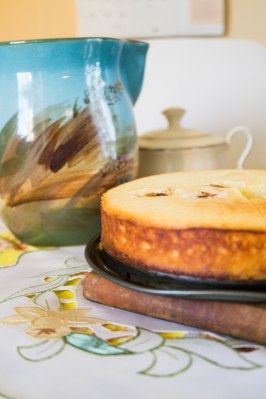
Curd Casserole. Kohupiimavorm

14 the of March is Estonian Native Langue Day.

Estonian belongs to the Finnic branch of the Uralic language family. Finnish and Estonian are very similar like for example Italian and Spanish.
Estonian is secret language 🙂 because only ca 1 million people speak this natively.

The biggest difference is that Estonian do not have prepositions (if you read my posts, you probably noticed, that this is the most complicated for me).
I am able to communicate in Russian, English and Finnish and I can tell you, that for saying the same idea, in Estonian this is the shortest, You need and use fewer words because you do not need prepositions 🙂

The second difference is that we do not have grammatical genders. She and He are both ” tema”. Foreigners asking often, how do you know does in this written text man or woman. And we are asking back: WHY this is important? Concentrate on the idea and content, not to the prejudices. And usually, people have names:)

And, unlike the Romance language speakers, we do not know does table or tree is female or male.
Yes, we believe in that nature has the spirit. In Estonian are very much onomatopoeias. But what gender has trees and stones. We do not care 🙂

But Estonian is not so easy. We have fourteen cases. And a lot of vowels.
You can say, that you Estonian is fluent if you are able to pronounce:
õunapuuõied, oaaed, Jüriööülestõus, jäääär, head aega.. 🙂
(apple tree blossoms, bean garden, St. George’s Night Uprising, the ice edge, good by)

For this day I present to you one very typical Estonian dessert.

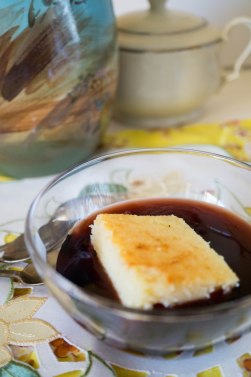
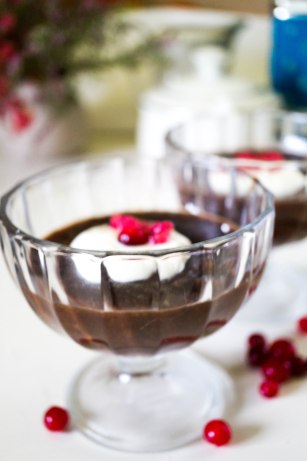
Quark Pudding with Kissel

  • Servings: 4-6
  • Difficulty: easy
  • Print

Quark Pudding is typical Estonian Dessert.Serve with sour cream or kissel

Ingredients

  • 50 g melted butter + some butter to grease baking form and some butter on the top of a dessert
  • 400 g quark/curd
  • 2 eggs
  • 2 dl semolina
  • 100 g sour cream
  • sugar and grated lemon peel
  • bread crumbs
Continue reading “Quark Pudding. Kohupiimavorm”

Black Bread Dessert. Leivasupp

dsc01677
Black Bread Dessert. Leivasupp

So, You baked black bread and probably have some leftovers. This is the easiest dessert in the world.
NB! of course, if you have very salty bread with caraway seeds, this is not dessert to you. Then make better Garlic Breads.


Already medieval cookbooks included recommendations to use toasted and grated black bread to make desserts. Baltic German cooks made black bread pudding with apples or chocolate and wine, rum or cognac. During the inter-war period, Estonian housewives took to making various desserts out of black bread, e.g. a chocolate pudding with black bread. In Soviet times, bread soup was often served in cafeterias, but people made it at home as well.

Black bread plays a major role in Estonian culture. There are tons of superstitions, traditions and old sayings about bread here. For example, you shouldn’t slice a new loaf in the evening or it will shrink, though this saying has become obsolete with the introduction of pre-sliced bread. Also, if you drop your slice of bread, you shouldn’t throw it away – you should pick it up, kiss it and then continue eating. And eating the heel piece will give you big breasts.
Continue reading “Black Bread Dessert. Leivasupp”

Estonian Pea Soup. Hernesupp

hernesupp-22
Traditional Pea Soup. Hernesupp

Vastlapäev, known as Shrove Tuesday in much of the English-speaking world, the Estonians celebrate this day a little differently.

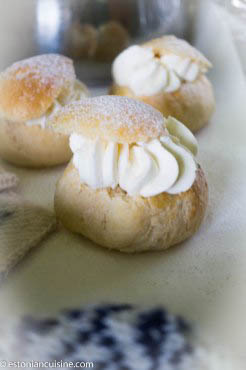
Instead of pancakes, we eat split pea soup and the delicious Vastlakukkel cream cake.
Traditionally children will sled down any available hill of snow, to get “long linens”.  And not only children. Tomorrow, after meeting I am going with my colleges  to sled, as well.
And later we have pea soup and Vastlakukkel!
Today, of course nobody care about linen, this is just for fun:)

The name Vastlapaev is taken from the German word “fasten” (to fast). And after Vastlapäev started fast, because meat was ran out.

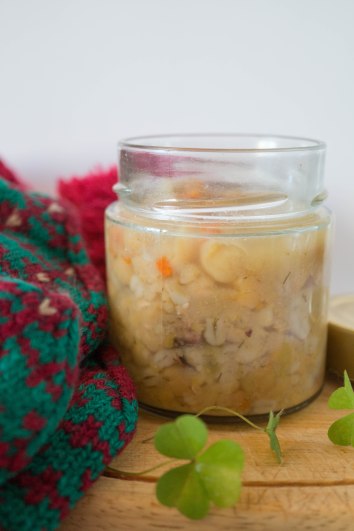
Traditional pea soup takes time, so this is reasonable to cook more soup and leftovers freeze or store in clean airtight jar.

Traditional Estonian Pea Soup. Hernesupp

  • Servings: 4-6
  • Print

Traditional Estonian Pea Soup takes time, but it is worth it

Ingredients

  • 500 g pork, best is (smoked) leg or ribs or pork belly
  • 0,5 glass of pearl barley
  • 400 g dried yellow peas
  • 1 onion, sliced
  • 2 carrots, sliced
  • for seasoning salt, mustard, pepper, garlic

Continue reading “Estonian Pea Soup. Hernesupp”

How To Do Estonian Black Bread. Leib

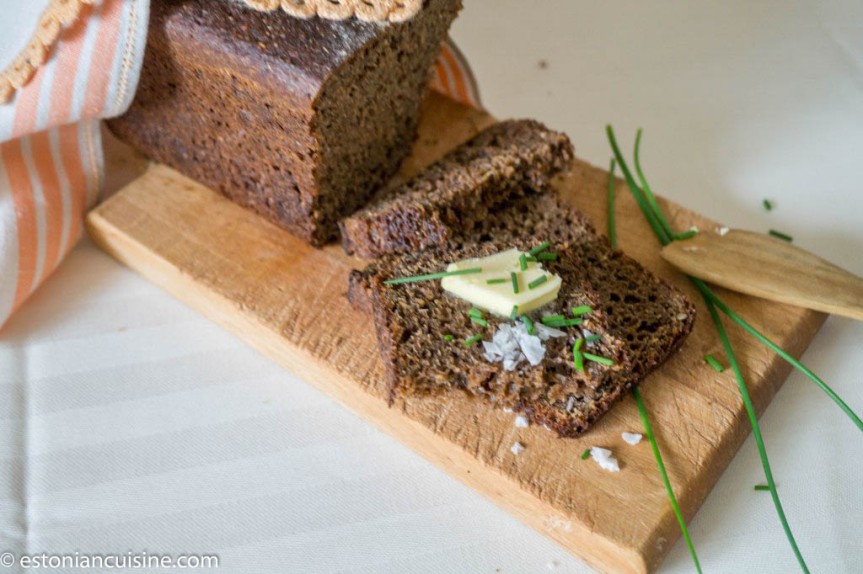
Estonian Black Bread is fermented Rye Bread.
For this bread, we have even the own word: LEIB.
“white wheat bread” we call “Sai”.

eestileib2
Estonian Black Rye Bread. Leib

Of course, shops are full of different loaves of bread, even with nuts and chocolate.
But some years ago, our first lady Evelin Ilves promoted the homemade bread. So, today, I believe, all Estonian woman has their own home-made bread recipe.

Each Estonian eat ca 10 kg white wheat bread and 30 kg black rye bread per year, so Rye bread is very popular and I can say, that this is something very “Estonian”.

24th February is Estonian Independence Day,  our republic become 99 years old 🙂
so this is the best day to bake the Estonian traditional rye Leib.

Continue reading “How To Do Estonian Black Bread. Leib”

Shrove Tuesday Buns. Vastlakuklid

oo, I LOVE Shrove Tuesday Buns:)

vastlakkel 1
Shrove Tuesday Buns. Vastlakukkel

I do not eat and like too many cookies and pies, but twice in the year: gingerbread and Shrove Tuesday Buns… I can eat without shame and limit 🙂

It seems easy stuff, but in Estonia, we have two parties. One camp says that Vastlakukkel must be only with whipped cream. And others are sure, that it must contain whipped cream and jam. So, the choice is yours.

Shrove Tuesday Buns

  • Servings: 15-16 buns
  • Difficulty: easy
  • Print

A traditional Shrove Tuesday dessert after Pea Soup and Pork legs

Ingredients

  • 2 dl milk
  • 25 g yeast
  • 3 tablespoon sugar
  • 1 egg
  • 100 g butter
  • 1/2 teaspoon salt, 1 teaspoon cardamom
  • 6 dl flour
  • 1 egg for coating buns
Continue reading “Shrove Tuesday Buns. Vastlakuklid”

Estonian Style Sauerkraut with Pork and Barley. Mulgikapsad

dsc01619
Estonian Style Sauerkraut with Pork and Barley. Mulgikapsad

Estonian Style Sauerkraut with Pork and Barley is called ” Mulgikapsad”. Kapsad- means Cabbage and
Mulgi- Mulgimaa is an area in South-Estonia, with own culture, traditions, food and dialect.

This area and culture is a perfect example of the globalisation already in 19th of the century. During the American Civil War from 1861 to 1865 was the lack of cotton and price was very high.
So, as demand for alternatives. South Estonia, Mulgimaa has perfect conditions for the cultivation of linen. Bondage was in Estonia abolished 1816, but still, farmers were very poor and the land was owned by landlords. But because of America and demand for linen, farmers get enough money to buy from landlords land and farms. And this area becomes rich and successful. This made others little bit jealous and they started to call people and this area Mulgimaa 🙂
In Latvia means word- Mulk- ” silly” and in Estonia it means “hole”- in meaning that all richness went into the one hole…:)

I am Mulk ( person, who is living and born in Mulgimaa), as well. My mother’s ancestry has been lived in Mulgimaa more than 400 years. Maybe more, but we have first written documents from 1630 of the year 🙂

Mulgikapsad can be served as a meal unto itself, usually with boiled potato and certainly with some fermented milk for a drink. You may cook this as a vegan, without meat.

Barley has been cultivated in Estonia longer than any other crops – for over 4,000 years. And pearl barley has been a staple food for Estonians through the ages; it has even been a food fit for celebrations. In the olden days, the tradition in Estonian villages was to make sauerkraut soup with pork and barley groats on Thursdays and Sundays.

Continue reading “Estonian Style Sauerkraut with Pork and Barley. Mulgikapsad”