Which and who is the right Mom?
In Estonia Mother’s Day (emadepäev in Estonian) is celebrated on the second Sunday of May.
The Mother of the Year is award given annually by the Estonian Womens Union, already more than 25 years.
This year suddenly rose up question. Does nominee of this award, the Mother of the Year, must be officially married.
Because nowadays, in the 21st of century there are a lot of single mothers, divorced mothers, gay mothers…..
Did you know, that 40% of Europeans believe, that gluten may cause digestive problems ?*
Can, believe, may cause…
Estonians eat rather fermented black bread, however there was an epidemic outburst few years ago. Turned out that.. most of us have gluten intolerance. The interesting thing about the disease is that you can not eat white bread. But pasta, semolina, burgers, couc cous are ok. … 🙂
I am apologizing to those who have the real disease.
but mostly it is a problem of control. Have you read the book Rolf Jensen, Mika Aaltonen The Renaissance Society: How the Shift from Dream Society to the Age of Individual Control will Change the Way You Do business.
I highly recommend.
Impossible to write Estonian food blog without quark.
You can buy quark from shop, but this is very easy to do by yourself.
If you have children, call them to join. To make quark is fun process and lesson about chemistry, cooking, health and fermentation 🙂 Quark recipe you can find here.
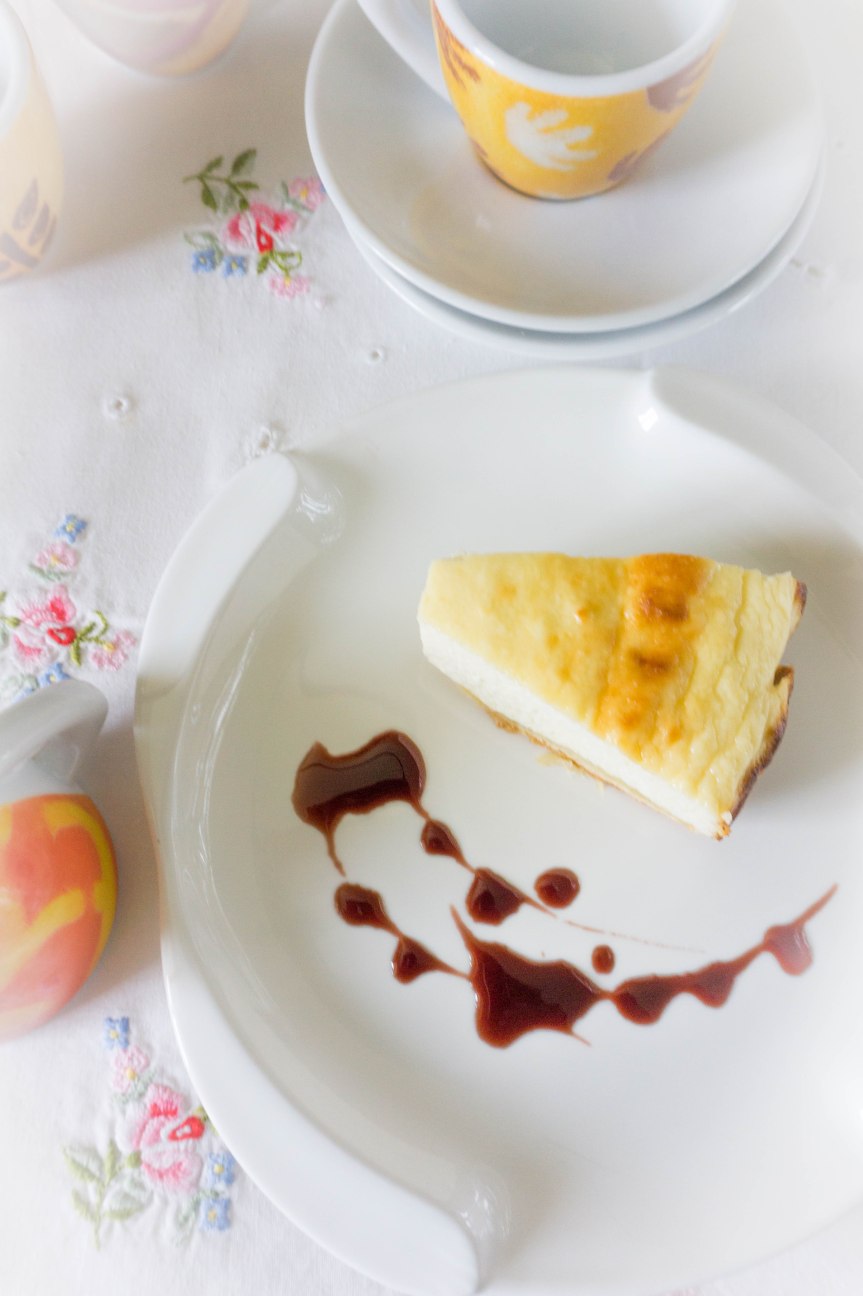
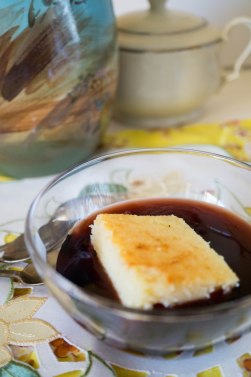
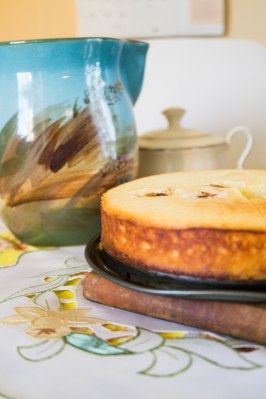
Estonian quark is made from skimmed milk and mesophilic starter. This is fat-free and mesophilic means, that quark is fermented on the low temperature. And if quark ready, bake delicious quark- cake.
Mulgimaa is perfect example about the globalisation already in 19th of century. During the American Civil War from 1861 to 1865 was lack of cotton and price was very high.
So, was demand for alternatives. South Estonia, Mulgimaa has perfect conditions for cultivation of linen. Bondage was in Estonia abolished 1816, but still farmers were very poor and land was owned by landlords. But because of America and demand for linen, farmers gets enough money to buy from landlords land and farms. And this area become rich and successful. This made others little bit jealous and they started to call people and this area Mulgimaa 🙂
In Latvia means word- Mulk- ” silly” and in Estonia it means “hole”- in meaning that the all richness went in to the one hole…:)
I have been already wrote about Mulgimaa. Estonian hidden treats.
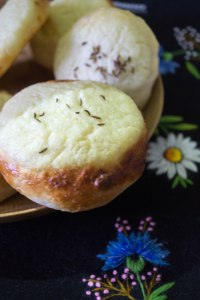
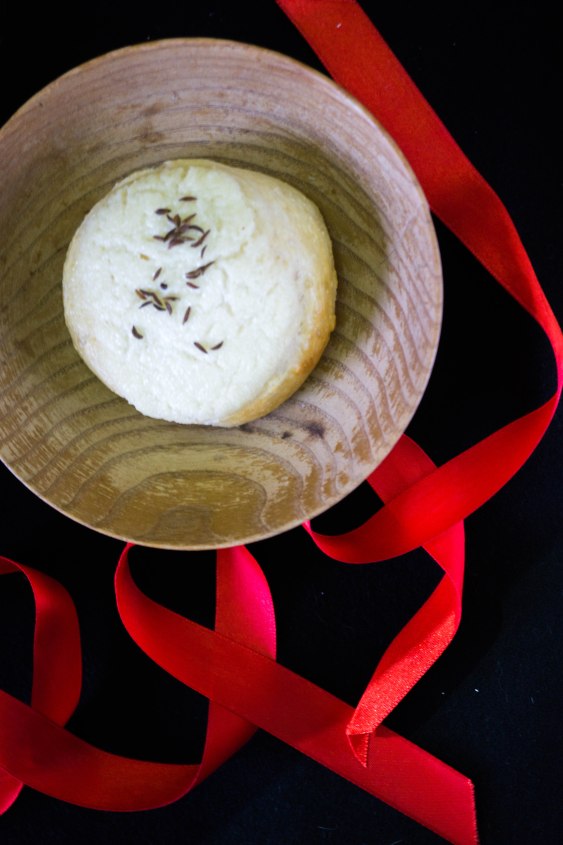
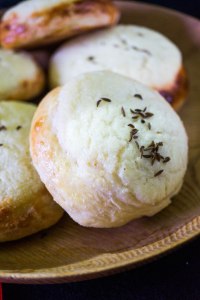
Mulgi- Mulgimaa is area in South-Estonia, with own culture, traditions, food and dialect. korbid (plural “korbid”, singular “korp”)- curd or semolina filled buns are one of its famous signature dish. Mulgi Korbid filling and buns itself are not very sweet. But you can make sweet filling and add more sugar in dough, as well.
Traditionally Mulgi Korbid has curd or semolina filling, but you can use potato filling, as well. This is perfect dish to made, when you made too much potato mash or bubert, and you have some leftovers.
Estonian Traditional Curd filled Buns. Mulgi Korbid.
Estonian belongs to the Finnic branch of the Uralic language family. Finnish and Estonian are very similar like for example Italian and Spanish.
Estonian is secret language 🙂 because only ca 1 million people speak this natively.
The biggest difference is that Estonian do not have prepositions (if you read my posts, you probably noticed, that this is the most complicated for me).
I am able to communicate in Russian, English and Finnish and I can tell you, that for saying the same idea, in Estonian this is the shortest, You need and use fewer words because you do not need prepositions 🙂
The second difference is that we do not have grammatical genders. She and He are both ” tema”. Foreigners asking often, how do you know does in this written text man or woman. And we are asking back: WHY this is important? Concentrate on the idea and content, not to the prejudices. And usually, people have names:)
And, unlike the Romance language speakers, we do not know does table or tree is female or male.
Yes, we believe in that nature has the spirit. In Estonian are very much onomatopoeias. But what gender has trees and stones. We do not care 🙂
But Estonian is not so easy. We have fourteen cases. And a lot of vowels.
You can say, that you Estonian is fluent if you are able to pronounce:
õunapuuõied, oaaed, Jüriööülestõus, jäääär, head aega.. 🙂 (apple tree blossoms, bean garden, St. George’s Night Uprising, the ice edge, good by)
For this day I present to you one very typical Estonian dessert.
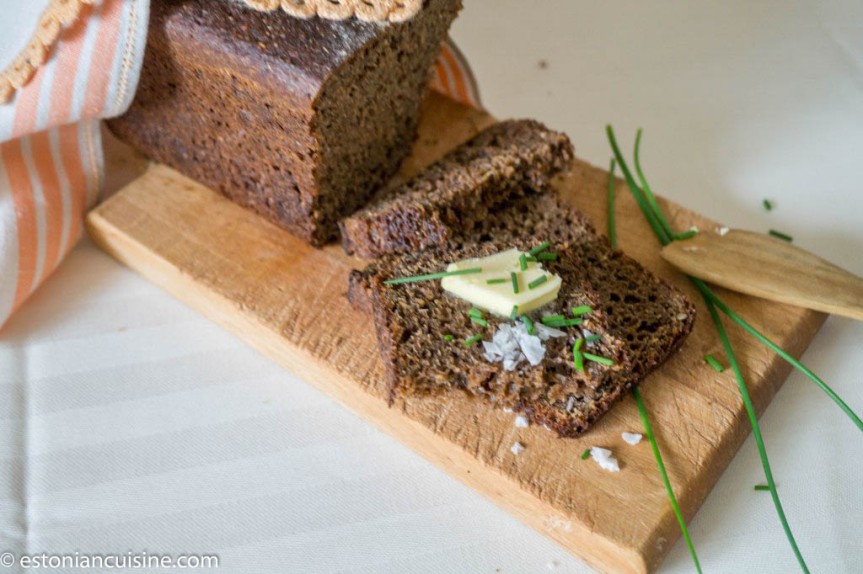
Estonian Black Bread is fermented Rye Bread.
For this bread, we have even the own word: LEIB.
“white wheat bread” we call “Sai”.
Estonian Black Rye Bread. Leib
Of course, shops are full of different loaves of bread, even with nuts and chocolate.
But some years ago, our first lady Evelin Ilves promoted the homemade bread. So, today, I believe, all Estonian woman has their own home-made bread recipe.
Each Estonian eat ca 10 kg white wheat bread and 30 kg black rye bread per year, so Rye bread is very popular and I can say, that this is something very “Estonian”.
24th February is Estonian Independence Day, our republic become 99 years old 🙂
so this is the best day to bake the Estonian traditional rye Leib.
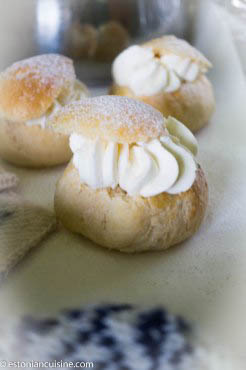
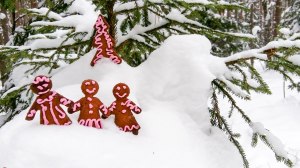
I do not eat and like too many cookies and pies, but twice in the year: gingerbread and Shrove Tuesday Buns… I can eat without shame and limit 🙂
It seems easy stuff, but in Estonia, we have two parties. One camp says that Vastlakukkel must be only with whipped cream. And others are sure, that it must contain whipped cream and jam. So, the choice is yours.
– ca 200 g gingerbreads
– 250 g quark
– 200 g sour cream
– 75 g butter, melted
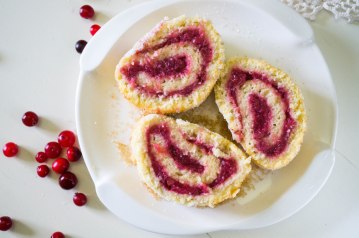
– ca 0,5 litre berries. If frozen, mix berries with starch
– 2 eggs
– sugar
[/recipe-ingredients]
From the first Advent until Christmas every night Estonian children put their shoe on their windowsill because Päkapikud (little elves) starts visits good children and brings at night into the child slipper, some candy.
Today there are of course discussions:) Is it a good idea, that “Päkapikud” leave candy, maybe it should be carrot or raisins 🙂
And what about “not good” children. But anyway, Christmas time is started and this is means Piparkook!
In Estonian, Piparkook means, in direct translation – pepper cake. So, nothing about ginger 🙂 Continue reading “Gingerbreads. Piparkoogid.”→





 Estonian Cuisine. Eesti Toit.