– ca 200 g gingerbreads
– 250 g quark
– 200 g sour cream
– 75 g butter, melted
– ca 0,5 litre berries. If frozen, mix berries with starch
– 2 eggs
– sugar
[/recipe-ingredients]
As You probably know, Estonians are the least religious nation.
The Estonian wordjõulud (Christmas) is of ancient Scandinavian origin and comes directly from the word Jul/ Hjul which means “cycle”, and has no real connection with Christianity.
Roasted Pork with Sauerkraut. Sealiha hapukapsaga
In 22th of December the Sun rises in Estonia at 9. 17 a clock and sets at 15.22. So, we do not need any fairy tales. We have very practical reason to celebrate 🙂
Jõulud as the winter solstice , when the day is the shortest and the night the longest, is celebrated between December 21 and 25. According to folk-tradition, “the sun was laying in the nest” and the day was celebrated as the Sun’s birthday. From that day on, the Sun started to rise and move slowly to the north again.
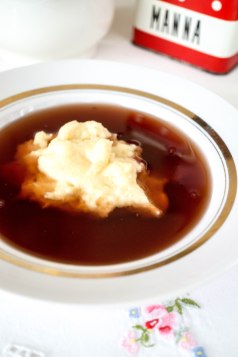
Bubert is a strange Estonian dessert because of its name. As it starts with the letter ”B” it must be a foreign originated word.As far as I know Bubert is mostly known in Latvia and Germany.
From the first Advent until Christmas every night Estonian children put their shoe on their windowsill because Päkapikud (little elves) starts visits good children and brings at night into the child slipper, some candy.
Today there are of course discussions:) Is it a good idea, that “Päkapikud” leave candy, maybe it should be carrot or raisins 🙂
And what about “not good” children. But anyway, Christmas time is started and this is means Piparkook!
In Estonian, Piparkook means, in direct translation – pepper cake. So, nothing about ginger 🙂 Continue reading “Gingerbreads. Piparkoogid.”→
St Catherine’s Day, Kadripäev, Nov 25 has been named after St Catherine, the patron saint of sheep. The mores and songs of St Catherine’s Day were very similar to the mores of St Martin’s Day. St Catherine’s Day was probably an ancient holiday, the beginning of women’s wintry handicraft was celebrated. During the winter, the women had to spin yard and thread from wool and flax and knit fabric and clothes for the whole family. Continue reading “Pearl Barley Risotto. Orsoto.”→
Layered Salad from beet and herring needs transparent bowl for serving. “Kasukas” mean in estonian “fur coat”, and name probably came from meaning that fur coat, covers you as layer .
The layered beetroot and herring salad originates from East Slavic cuisine. During Soviet times, this salad, with its special sauce made of sour cream, mayonnaise and mustard, was prepared for celebrations along with potato salad and the Russian beet and potato salad.
Beetroot has been used in Estonian cuisine already since the 17th–18th century. A lot of beetroot dishes have reached us through Slavic cuisine, so dishes like Russian beetroot and potato salad, Borscht and cold beetroot soups were known already in the Baltic German cuisine. From then on, beetroot dishes were included among the foods of the pre-war Republic of Estonia.




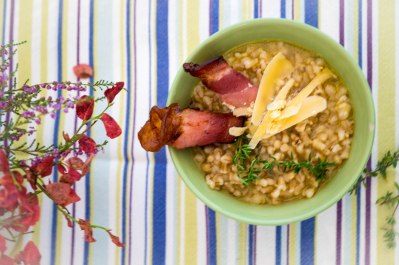 Recepie for Pearl Barley.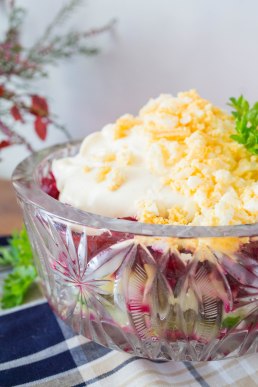




 Estonian Cuisine. Eesti Toit.