Mother: why did you buy for child potato chips?!
Grandmother: But potato is vegetable and vegetables are healthy.
I present to you one nice healthy 🙂 vegetable casserole. Suitable as main dish or side dish.
Estonian Style Sauerkraut with Pork and Barley. Mulgikapsad
Estonian Style Sauerkraut with Pork and Barley is called ” Mulgikapsad”. Kapsad- means Cabbage and
Mulgi- Mulgimaa is an area in South-Estonia, with own culture, traditions, food and dialect.
This area and culture is a perfect example of the globalisation already in 19th of the century. During the American Civil War from 1861 to 1865 was the lack of cotton and price was very high.
So, as demand for alternatives. South Estonia, Mulgimaa has perfect conditions for the cultivation of linen. Bondage was in Estonia abolished 1816, but still, farmers were very poor and the land was owned by landlords. But because of America and demand for linen, farmers get enough money to buy from landlords land and farms. And this area becomes rich and successful. This made others little bit jealous and they started to call people and this area Mulgimaa 🙂
In Latvia means word- Mulk- ” silly” and in Estonia it means “hole”- in meaning that all richness went into the one hole…:)
I am Mulk ( person, who is living and born in Mulgimaa), as well. My mother’s ancestry has been lived in Mulgimaa more than 400 years. Maybe more, but we have first written documents from 1630 of the year 🙂
Mulgikapsad can be served as a meal unto itself, usually with boiled potato and certainly with some fermented milk for a drink. You may cook this as a vegan, without meat.
Barley has been cultivated in Estonia longer than any other crops – for over 4,000 years. And pearl barley has been a staple food for Estonians through the ages; it has even been a food fit for celebrations. In the olden days, the tradition in Estonian villages was to make sauerkraut soup with pork and barley groats on Thursdays and Sundays.
Maybe it is not very original food, but because this is very typical in Estonian cuisine, as well, I will add this. Each Estonian eat ca 100 kilo potatoes in year !
My father was kid after war. and he is talking about times, when to “cheat” classmates that they have enough butter at home, they spread mashed potato between sandwich…Potato porridge seems like butter 🙂
As You probably know, Estonians are the least religious nation.
The Estonian wordjõulud (Christmas) is of ancient Scandinavian origin and comes directly from the word Jul/ Hjul which means “cycle”, and has no real connection with Christianity.
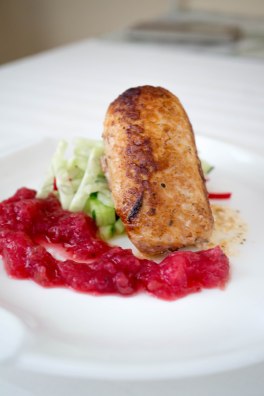
Roasted Pork with Sauerkraut. Sealiha hapukapsaga
In 22th of December the Sun rises in Estonia at 9. 17 a clock and sets at 15.22. So, we do not need any fairy tales. We have very practical reason to celebrate 🙂
Jõulud as the winter solstice , when the day is the shortest and the night the longest, is celebrated between December 21 and 25. According to folk-tradition, “the sun was laying in the nest” and the day was celebrated as the Sun’s birthday. From that day on, the Sun started to rise and move slowly to the north again.
St Catherine’s Day, Kadripäev, Nov 25 has been named after St Catherine, the patron saint of sheep. The mores and songs of St Catherine’s Day were very similar to the mores of St Martin’s Day. St Catherine’s Day was probably an ancient holiday, the beginning of women’s wintry handicraft was celebrated. During the winter, the women had to spin yard and thread from wool and flax and knit fabric and clothes for the whole family. Continue reading “Pearl Barley Risotto. Orsoto.”→
Layered Salad from beet and herring needs transparent bowl for serving. “Kasukas” mean in estonian “fur coat”, and name probably came from meaning that fur coat, covers you as layer .
The layered beetroot and herring salad originates from East Slavic cuisine. During Soviet times, this salad, with its special sauce made of sour cream, mayonnaise and mustard, was prepared for celebrations along with potato salad and the Russian beet and potato salad.
Beetroot has been used in Estonian cuisine already since the 17th–18th century. A lot of beetroot dishes have reached us through Slavic cuisine, so dishes like Russian beetroot and potato salad, Borscht and cold beetroot soups were known already in the Baltic German cuisine. From then on, beetroot dishes were included among the foods of the pre-war Republic of Estonia.
I know about Turnip two things.
The First is famous Russian Fairy Tale. And the second, before potato arrived from America, ancient Estonians ate turnips.
Turnip in estonian ” Naeris”. And ” Naeris” means, “laughed”, as well. So, “Naeris naeris”- means “Turnip laughed” 🙂
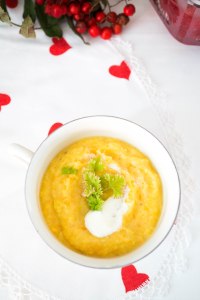
Turnip Soup
Ingredients
onion
2 carrots
ca 50 g butter
2 potato
2 turnips
2 apple
for seasoning mustard, sour cream and salt, pepper
Directions
1. Chop vegetables
2. Turn on the Kettle
3. Melt in the pot butter and add onion and carrot
4. Pour in boiling water Continue reading “Turnip Soup”→

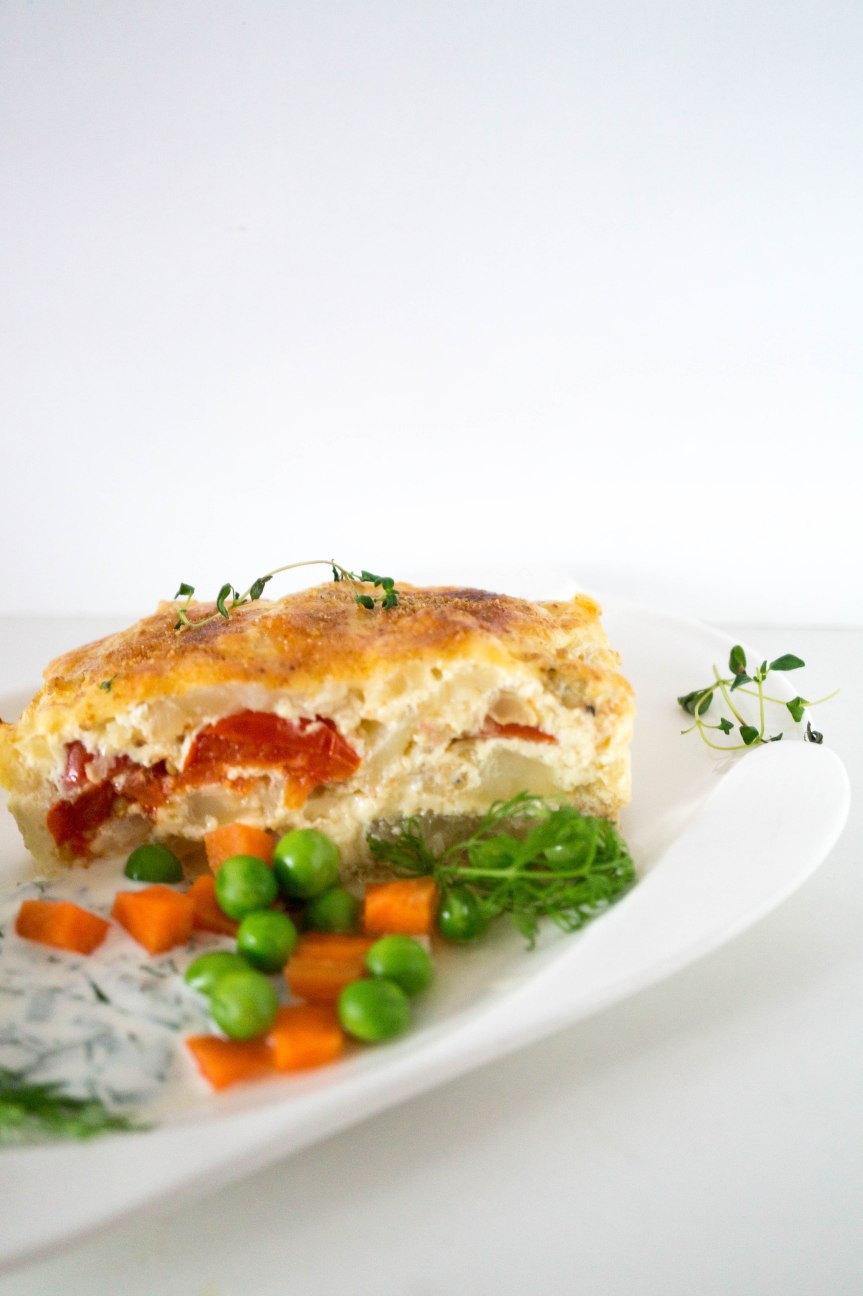
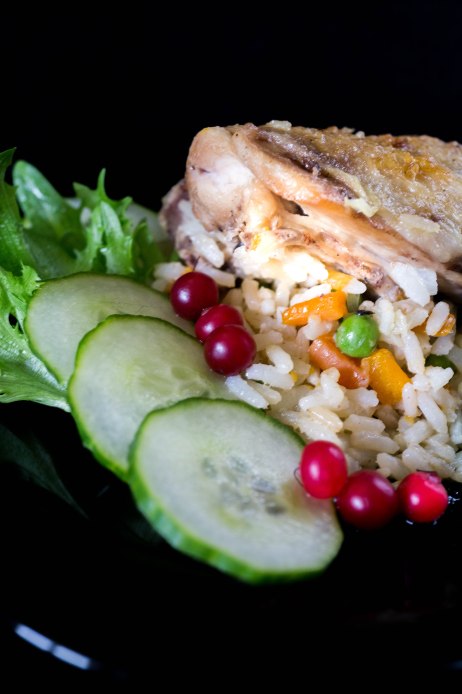 Simple everyday supper.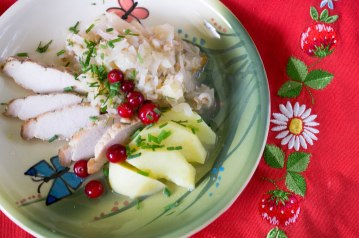
 Maybe it is not very original food, but because this is very typical in Estonian cuisine, as well, I will add this. Each Estonian eat ca 100 kilo potatoes in year !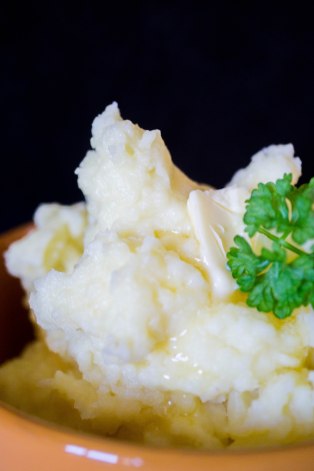

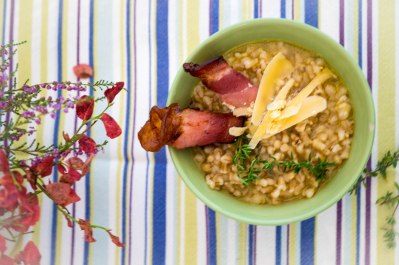 Recepie for Pearl Barley.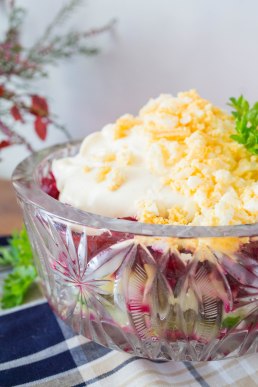
 Estonian Cuisine. Eesti Toit.